

设计说明书
总字数:14000+
摘 要
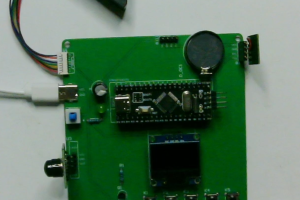
教室作为学生的学习场所,目前很多学校由于疏于管理或者管理不到位,教室内灯火通明却空无一人的现象屡见不鲜,不仅造成了严重的资源浪费,也对学校的形象造成了不良的影响。因此设计一个智能灯光节能控制系统对学校教室的灯光进行控制,避免上述现象发生,以节约能源。本设计采用STM32单片机作为主控芯片,通过按键可以对开灯时间和关灯时间进行设置,通过按键可以进行指纹录入、模式切换和时间修正,通过人体热释电感应模块检测是否有人,通过单片机内部RTC对时间进行获取,采用蓝牙模块进行数据的双向传输。教室灯控系统上电后,在自动模式下,在允许开灯时间内,并检测到有人,自动控制照明灯打开,否则关闭照明灯。在手动模式下,通过按键可控制照明灯的打开和关闭。本设计结合教室合理开灯的条件,通过对人体存在信号和时间信号的识别与判断,完成对教室灯光的智能控制,避免教室用电浪费达到节能目的。
关键词:智能教室;灯光控制;人体热释电;指纹
Abstract
Classrooms, as a learning place for students, are currently a common phenomenon in many schools due to poor or inadequate management, resulting in bright but empty classrooms. This not only causes serious resource waste, but also has a negative impact on the image of the school. Therefore, an intelligent energy-saving lighting control system is designed to control the lighting of school classrooms, avoiding the occurrence of the above phenomena and saving energy.This design uses the STM32 microcontroller as the main control chip. The on and off time of the light can be set by pressing buttons. Fingerprint input, mode switching, and time correction can be carried out by pressing buttons. The presence of people can be detected by the human pyroelectric induction module, and the time can be obtained through the RTC inside the microcontroller. The Bluetooth module is used for bidirectional data transmission. After the classroom lighting control system is powered on, in automatic mode, if someone is detected within the allowed lighting time, the lighting will be automatically controlled to turn on. Otherwise, the lighting will be turned off. In manual mode, the lights can be controlled to turn on and off by pressing the button.This design combines the reasonable lighting conditions of the classroom, and achieves intelligent control of classroom lighting by identifying and judging human presence signals and time signals, avoiding waste of electricity in the classroom and achieving energy-saving goals.
Key words:intelligent classroom; Lighting control; Human pyroelectricity; fingerprint
目录
1 绪论
1.1项目背景和意义
1.2国内外研究现状
1.3项目的设计任务
2总体方案设计
2.1主要元器件选择
2.1.1主控模块方案选择
2.1.2按键方案选择
2.1.3显示模块方案选择
2.2系统总体设计思路
3硬件系统设计
3.1主控模块电路
3.1.1 主控模块电路
3.1.2 晶振电路
3.1.3 复位电路
3.1.4 电源电路
3.1.5 下载电路
3.2人体热释电感应模块电路
3.3指纹模块电路
3.4照明灯模块电路
3.5显示模块电路
3.6 按键电路
3.7蓝牙模块(ECB02)
4软件设计
4.1 编程软件介绍
4.2 系统主流程设计
4.3 独立按键
4.4 OLED显示流程设计
4.5 蓝牙模块子流程
5实物测试
5.1实物运行测试
5.2实时时间设置测试
5.3定时时间设置实物测试
5.4照明灯模块测试
5.5指纹模块测试
5.6蓝牙模块实物测试
结论
参考文献
致谢
附录
附录一:原理图
附录二:PCB
附录三:主程序
购买后可查看具体内容!